Men’s Tennis Etiquette: Style, Respect, and the Code of the Court
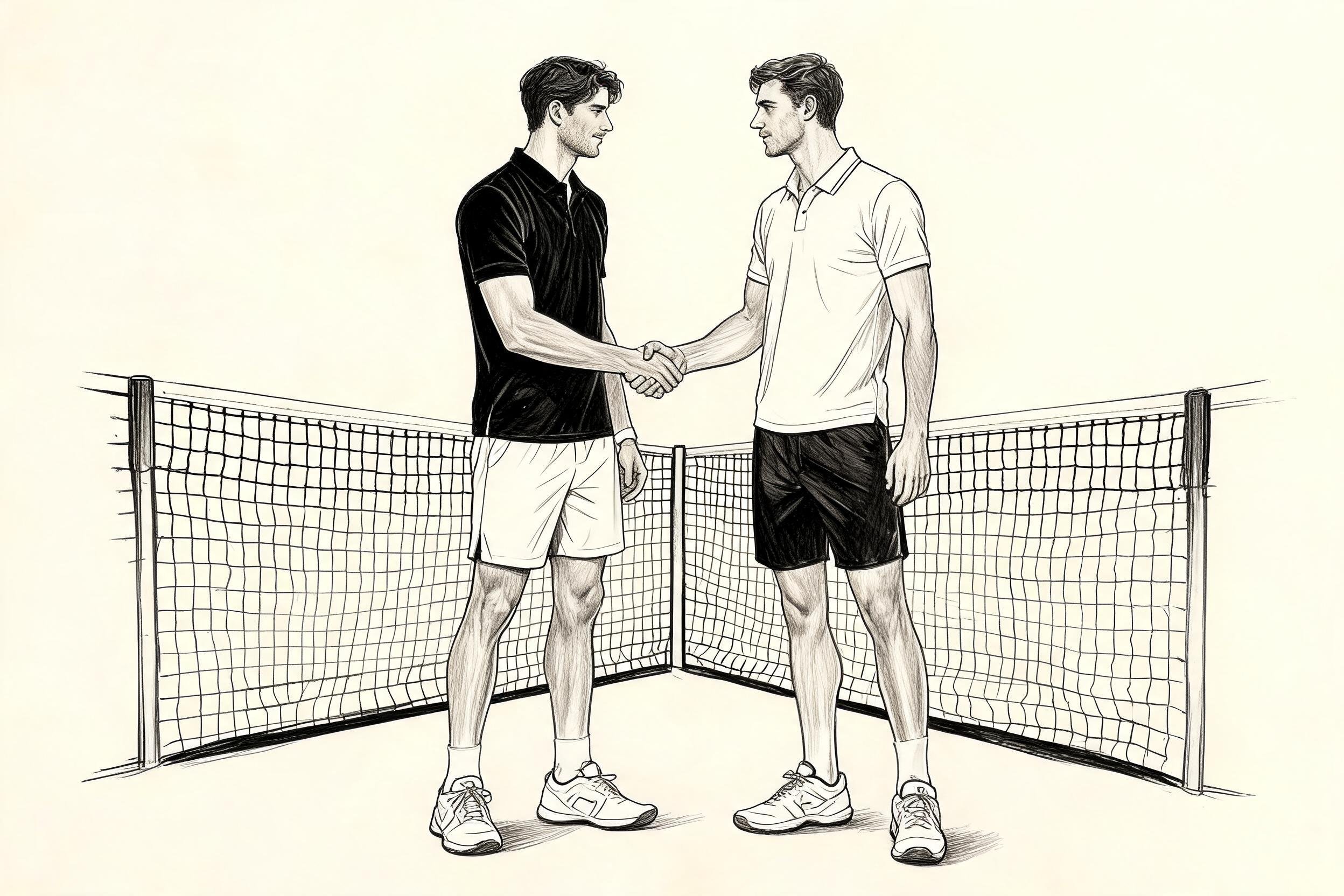
In tennis, the match does not always end with the final point.
Sometimes it ends three seconds later.
At the net.
That short walk forward can feel longer than an entire set. You are tired. You are annoyed. Maybe you lost a match you should have won. Maybe your opponent celebrated too loudly. Maybe he questioned your calls. Maybe he hit straight at your body from close range. Maybe he served underarm when you were standing deep. Maybe he kept checking marks like your word meant nothing.
Then the point is over. The score is final. The crowd has moved on.
And tennis asks you to do one very simple thing.
Shake hands.
Simple, but not always easy.
That is what makes tennis different. The sport looks elegant from a distance, but anyone who plays knows how personal it can get. It is one man across from another. No teammates. No excuses. No place to hide. Every missed forehand belongs to you. Every tight second serve belongs to you. Every bad decision sits with you.
And after all of that, you still have to meet your opponent at the net.
That moment says a lot.
At Bad Boy Tennis, we believe the modern tennis man can play with edge and still carry himself with class. He can compete hard, dress sharply, show intensity, and still understand the code of the court.
Because in tennis, the final point wins the match.
The handshake reveals the man.
The Handshake Is Never Just a Handshake
A tennis handshake is not just a polite gesture. It is a receipt.
It tells your opponent, the people watching, and yourself that you competed, handled the pressure, and left the court with your standard intact.
That does not mean every handshake has to be warm. Not every match deserves a smile. Not every opponent becomes a friend. Some matches are tense. Some are irritating. Some feel unfair. Some bring out the worst parts of competition.
A short handshake can still be respectful.
A cold handshake can still have discipline.
But there is a difference between controlled and careless.
Controlled says, “I did not like what happened, but I respect the game.”
Careless says, “I lost control of myself.”
The modern tennis man should know the difference.
Real Tennis Etiquette Lives in the Small Moments
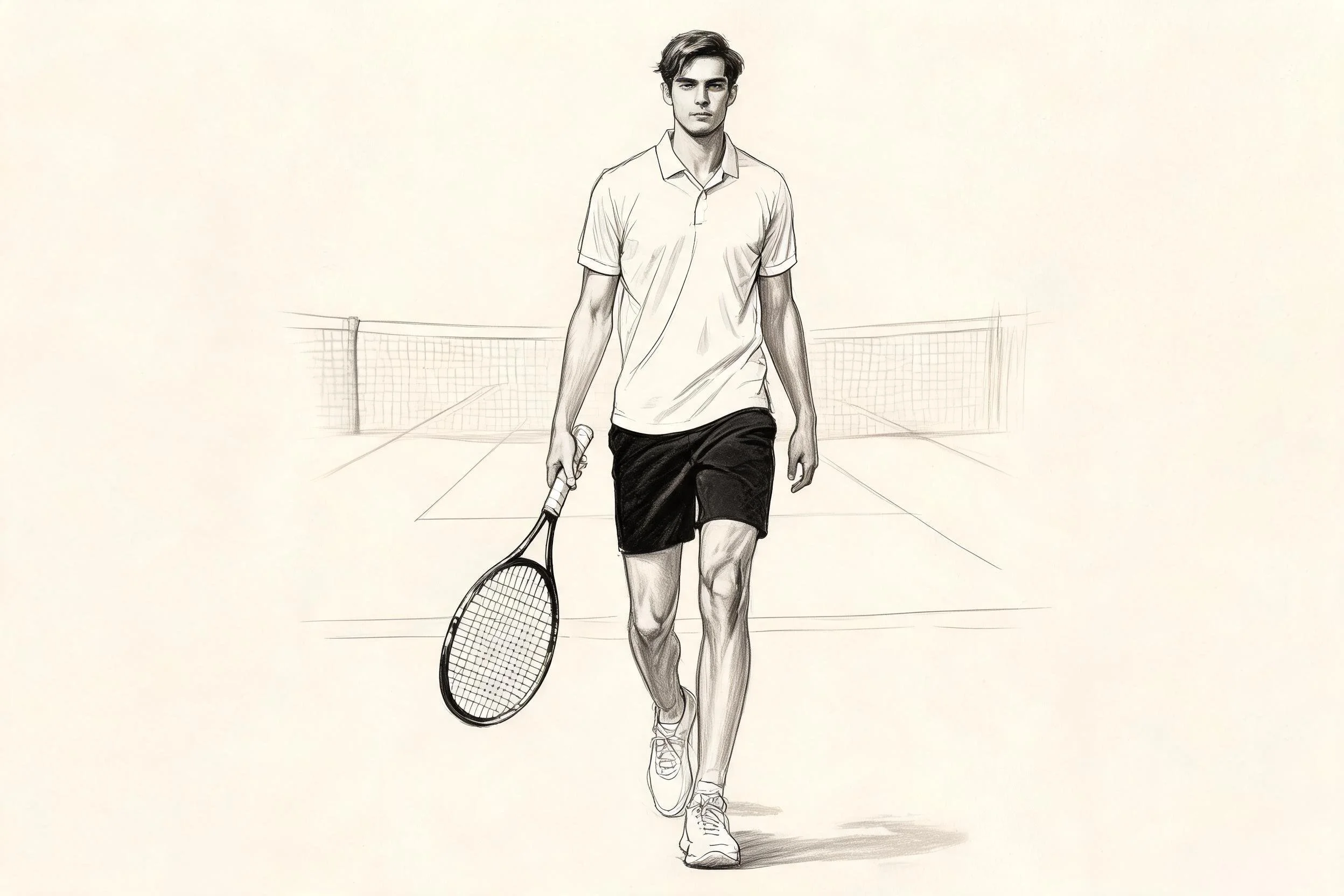
Most tennis tension does not come from one dramatic point. It builds slowly.
A ball lands close to the line. Your opponent calls it out. You think it caught the edge.
A net cord drops over. He wins the point and does not acknowledge the luck.
You miss a second serve and he celebrates like he hit a winner.
He questions every close call.
He checks every clay mark as if your word is not enough.
He hits a body shot from close range. Legal, yes. Comfortable, no.
He serves underarm when you are standing deep. Smart, maybe. Annoying, definitely.
That is the interesting thing about tennis. Not everything that feels wrong is technically against the rules. Some things are legal. Some things are strategy. Some things are just part of the match.
But tennis is not only about what is legal.
It is also about what feels right.
That is where the code lives.
The code is not printed on your shirt. It is not announced before the match. It is understood.
Call your own lines honestly.
Apologize when luck gives you a cheap point.
Do not celebrate another man’s double fault like you just won a final.
Do not question every call because you are frustrated.
Do not turn competition into disrespect.
And when it is over, walk to the net like a man who can handle the result.
Playing With Edge Does Not Mean Losing Class
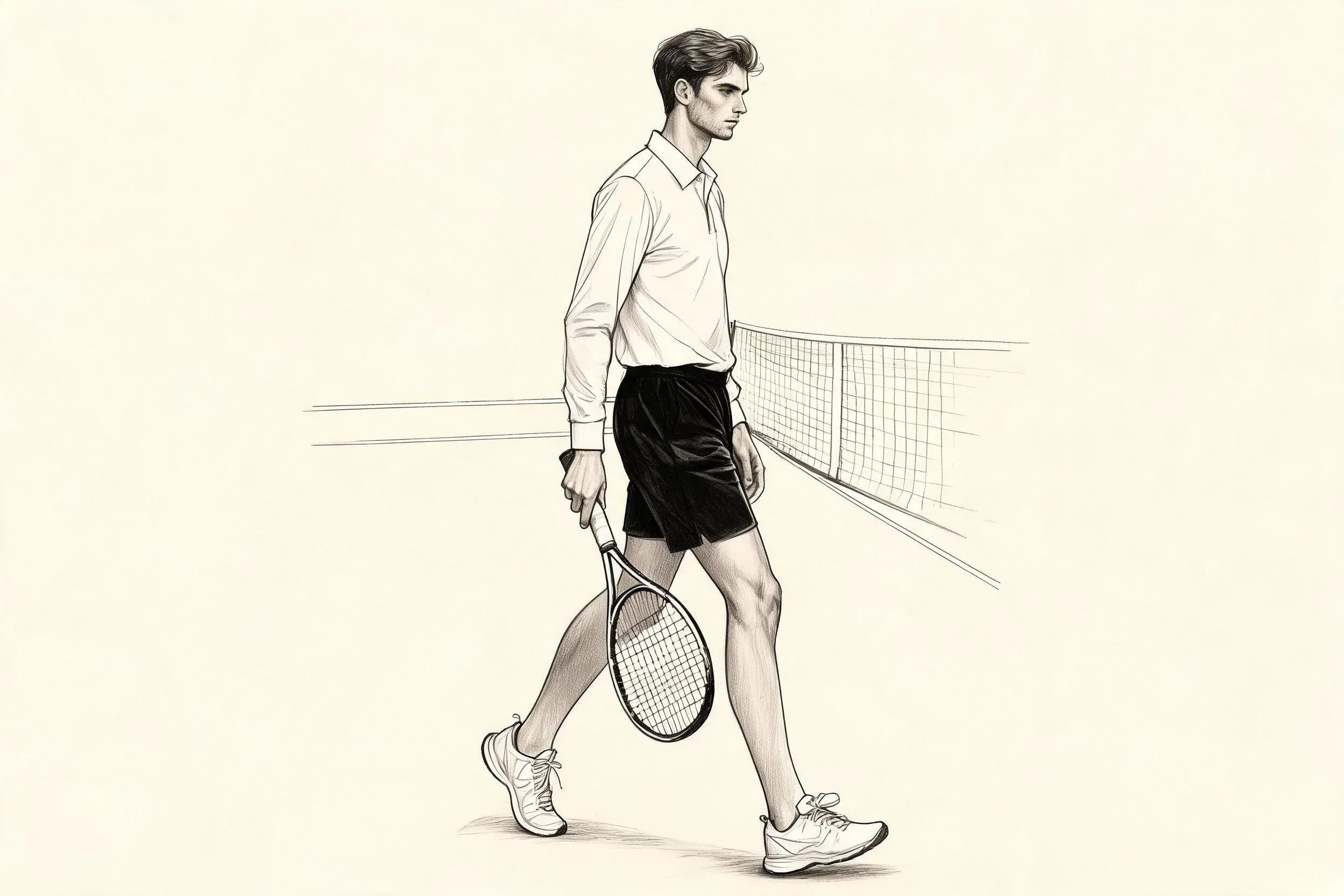
Bad Boy Tennis is built on attitude.
But attitude without discipline is cheap.
Anyone can act tough when they are winning. Anyone can look confident when the score is easy. The real test comes when the match gets uncomfortable.
When you are down a break.
When you get hooked on a line call.
When your legs are heavy.
When your serve disappears.
When you have match point and miss.
When the guy across the net starts talking, staring, questioning, or celebrating a little too much.
That is when style becomes more than clothing.
That is when style becomes behavior.
A man with real presence does not need to perform every emotion. He can be intense without being messy. Competitive without being cheap. Cold without being disrespectful. Confident without being loud.
He knows when to speak.
He knows when to let the scoreboard speak.
He knows when to shake hands and walk away.
That is not weakness.
That is control.
The Court Exposes the Man
Tennis has a way of revealing people.
You learn a lot about a man when he is tired, losing, frustrated, and alone with his thoughts. You see how he handles pressure. You see if he makes excuses. You see if he respects the game when the game is not giving him what he wants.
It is easy to look sharp before the match.
Clean white shirt. Black tennis shorts. Fresh white sneakers. Hoodie over the shoulder. Racket in hand. Everything looks controlled.
But the real question is whether you can still look composed after two hours in the sun. After bad calls. After missed chances. After a scoreline that did not go your way.
That is the standard.
Dress well.
Play hard.
Keep your word.
Shake hands.
Leave clean.
Style Is Part of the Code
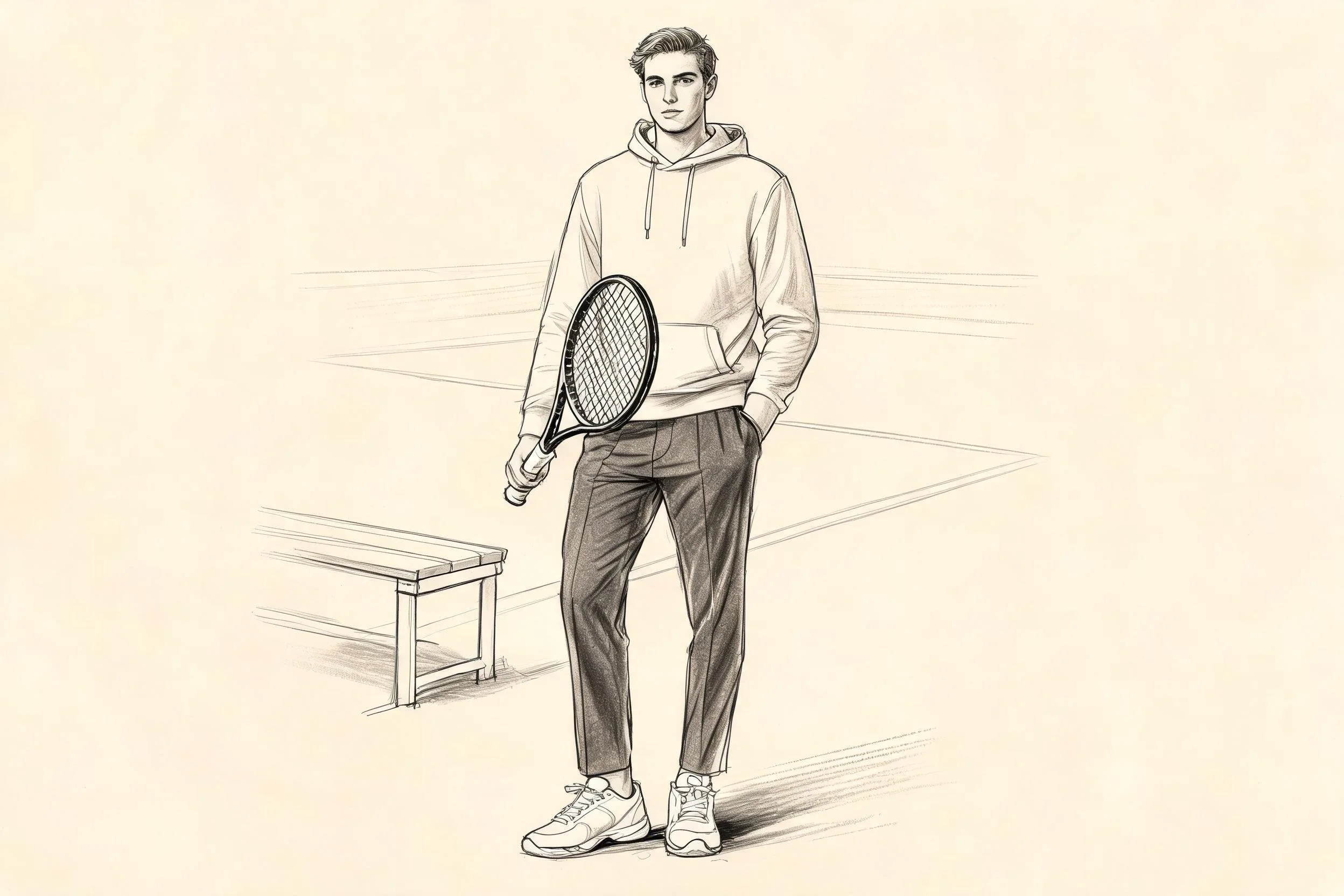
Tennis has always had a visual language.
White shirts. Black shorts. Clean sneakers. Simple layers. Minimal branding. Nothing too loud. Nothing trying too hard.
For men, the strongest tennis style is not complicated. It is precise.
A white tennis shirt.
A black court tee.
A long-sleeve layer for cooler mornings.
Black or white tennis shorts.
Dark gray trousers after the match.
A black, white, or ecru hoodie.
Crisp white designer sneakers.
The look should feel athletic, refined, and slightly rebellious.
Not country club predictable.
Not streetwear chaos.
Something sharper.
This is where Bad Boy Tennis lives.
Classic enough for the court.
Sharp enough for after.
Bad enough to stand apart.
The Bad Boy Is Not the Loudest Man on Court
The name Bad Boy Tennis carries energy. But the bad boy is not the guy losing his mind after every point.
He is not the guy screaming over a missed call.
He is not the guy celebrating cheap errors.
He is not the guy who needs everyone to know he is angry.
The real bad boy is quieter than that.
He plays hard.
He dresses with intention.
He brings intensity.
He holds his line.
He does not beg for respect.
He earns it.
That is the difference between attitude and noise.
Noise fades.
Presence stays.
The Net Is Where the Ego Gets Tested
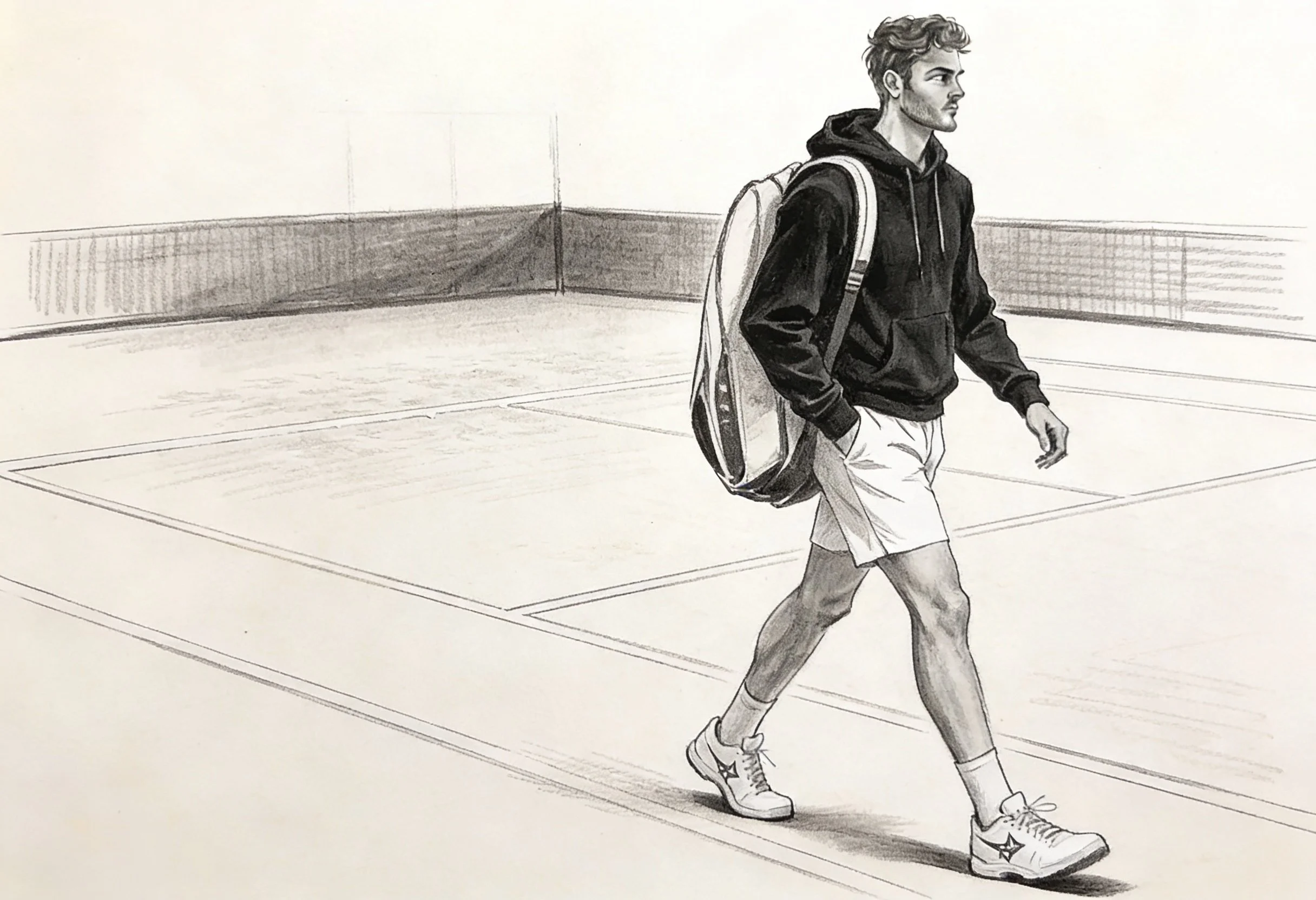
The walk to the net is small, but it carries weight.
You may not like the guy across from you. You may not like how he played. You may not like how he acted. You may not even like yourself in that moment.
Still, tennis gives you the same ending every time.
Walk forward.
Look up.
Shake hands.
Move on.
That moment is not about pretending you are happy.
It is about proving you are composed.
The modern tennis man can wear black. He can play aggressively. He can bring edge. He can make noise with his game. But he still knows the code.
Because style is not only what you wear.
It is how you compete.
It is how you lose.
It is how you win.
It is how you leave.
That is tennis.
That is the code.
That is Bad Boy Tennis.